Survey Questions: Risk
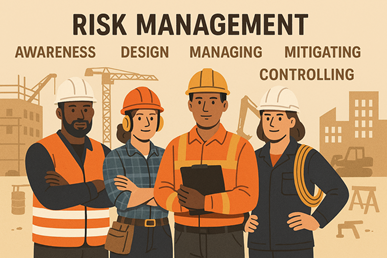
Definition: Risk management is the process of evaluating potential risks, analyzing their likelihood against acceptable levels, and implementing proactive strategies to mitigate setbacks while ensuring workplace safety and efficiency. It involves monitoring and controlling risks through structured initiatives, aligning management activities with business processes, and embracing opportunities for growth while minimizing disruptions. Effective risk management requires clear communication, ongoing training, and responsive leadership that actively assesses consequences, supports process improvements, and swiftly addresses critical situations to reduce losses.
Job Satisfaction
Decision Making
Problem Solving
Critical Thinking
Adaptability
Planning
Innovation
Time Management
Job Content and Design
Goals
Feedback
Security
Risk Management
Quality
Pay
Benefits
Systems
Equipment
Feedback/Guidance
Performance
Performance Appraisal/Management
Safety
Stress
Work/Life
Job Security
Customer Service
Surveys that include measures of Risk:
Example 1 (5-point scale; numbers; NA)
Example 2 (7-point scale; radio buttons)
Example 3 (4-point scale; radio buttons)
Example 4 (5-point scale; radio buttons)
Example 5 (5-point scale; words)
Example 6 (Pulse Survey)
Example 7 (5-point scale; item comments)
Example 8 (3-point scale; words; N/A)
Example 9 (4-point scale; numbers)
Example 10 (Comment boxes only)
Example 11 (Single rating per dimension)
Example 12 (Slide-bar scale)
Example 1 (5-point scale; numbers; NA)
Example 2 (7-point scale; radio buttons)
Example 3 (4-point scale; radio buttons)
Example 4 (5-point scale; radio buttons)
Example 5 (5-point scale; words)
Example 6 (Pulse Survey)
Example 7 (5-point scale; item comments)
Example 8 (3-point scale; words; N/A)
Example 9 (4-point scale; numbers)
Example 10 (Comment boxes only)
Example 11 (Single rating per dimension)
Example 12 (Slide-bar scale)
Evaluates Risk
Evaluates Risk focuses on assessing the likelihood and impact of risk events to inform strategic decision-making and ensure compliance. This dimension highlights understanding probability, determining acceptable risk tolerance, using risk management for project implementation, and supporting corporate objectives. It prioritizes general assessment and strategic integration, ensuring risk is systematically evaluated within the organization.
- Senior leadership of the company is effective in determining an acceptable level of risk tolerance for the company.
- Our department effectively uses risk management information.
- My supervisor uses risk management to be more effective in identifying and implementing projects.
- My supervisor uses risk management to make better strategic decisions.
- I understand how to evaluate the probability of a risk event occurrence.
- Senior leadership evaluates the impact of certain events on the attainment of corporate objectives.
- My manager evaluates risks in terms of their consequences and likelihood of occurrence.
- My supervisor uses risk management to remain in compliance with regulations.
Risk Analysis
Risk Analysis emphasizes prioritizing, quantifying, and systematically analyzing risks to determine the most pressing threats and guide mitigation strategies. This dimension centers on identifying critical risks, leveraging statistical models (like Monte Carlo Simulations), performing audits, and optimizing resource allocation to minimize adverse outcomes. It prioritizes structured evaluation and proactive mitigation, ensuring risks are examined comprehensively and addressed effectively.
- I am able to evaluate risks against acceptable risk levels.
- Our department regularly performs a risk analyses to minimize adverse outcomes.
- Our department performs a risk analysis as needed.
- The company's Internal Audit Department regularly conducts internal audits of risk assessments.
- I am able to prioritize the risks facing the department to determine the most pressing needs.
- My manager determines which are the serious threats.
- My manager uses Monte Carlo Risk Simulations and decision analytics to create the best possible strategic decisions.
- My manager effectively prioritizes risks to act on critical issues first.
- I am able to quantify current business practices to make better informed decisions.
- Senior leadership prioritizes risks based on probability of occurrence and possible impact to the company.
Risk Awareness
Risk Awareness focuses on recognizing, identifying, and understanding potential risks in business operations, compliance, and workplace activities. This dimension highlights being able to perceive financial, regulatory, and operational risks, ensuring individuals and leadership can assess potential threats and opportunities. It prioritizes risk perception and comprehension, ensuring that employees and managers are equipped with the knowledge to recognize risks before they escalate.
- Supervisors correctly perceive the risks of different work tasks and activities.
- My manager understands how to meet regulatory compliance.
- My manager accurately perceives potential risks in the workplace.
- I am aware of the financial implications of certain risks.
- Senior Leaders understand that risk may represent a threat or an opportunity.
- I have the knowledge and skills to accurately identify risks in the workplace.
- I can identify the most significant risks from business operations.
- My manager accurately perceives potential risks in the workplace and initiates preventative measures.
- My manager understands the possible financial risks of different events.
- I am aware of process safety management.
Determines the Consequences
Determines the Consequences focuses on evaluating the potential impact of risks and understanding their effects on business operations, financial outcomes, and strategic goals. This dimension highlights assessing acceptable risk levels, anticipating the results of adverse events, and even identifying opportunities to leverage risks for competitive advantage. It prioritizes impact analysis and strategic decision-making, ensuring organizations can prepare for and respond to risks effectively.
- Senior leaders determine the impact of specific risks on finances.
- My manager accurately determines appropriate risk levels (i.e., levels of acceptable risk).
- Our department effectively anticipates the consequences of different potential risk events.
- My manager seeks to capitalize on risks.
- My manager determines if the level of risk is tolerable.
- My manager looks for opportunities to turn a risk event into an advantage for the company.
- Leadership recognizes the potential impact of systemic risks.
- Supervisors are effective in determining the potential outcome of adverse risk events.
Design Initiatives
Design Initiatives emphasizes developing structured policies, frameworks, and strategic responses to manage and mitigate risks effectively. This dimension centers on aligning risk management processes with business strategy, creating policies, setting proportional responses, and ensuring risk management initiatives enhance company success. It prioritizes proactive risk management and policy design, ensuring organizations have structured approaches to minimizing threats and adapting to changing conditions.
- Managers align risk management activities with existing processes.
- Senior leadership creates a risk management strategy for the organization.
- Our department effectively outlines the risk management framework including responsibilities, description of the process, and guidance on evaluating risk criteria and appropriate risk responses.
- My supervisor determines the proper tools to efficiently manage the risk.
- The project leader creates a risk profile for projects and teams.
- The Supervisor designs risk response activities that are proportionate to the level of risk.
- My manager develops policies to address risk situations in the workplace.
- Our department designs risk management activities that support the success of the company.
- Our department develops policies for risk management.
- Senior leadership creates dynamic and responsive enterprise risk management processes.
- Supervisor are able to determine a proportional response in relation to the level of risk.
Manages Risk
Manages Risk focuses on assessing, overseeing, and strategically handling risks to ensure long-term sustainability and informed decision-making. This dimension highlights accepting calculated risks when necessary, viewing risks as opportunities for profit, implementing strategic risk management, and making tactical decisions in changing environments. It prioritizes risk oversight and adaptation, ensuring that risk is effectively integrated into business strategy rather than simply avoided.
- My manager is effective in basing decisions on patterns found in fluid/changing information.
- My manager works effectively to mitigate risks.
- Project managers effectively manage risk for the department.
- I am willing to accept risk as needed.
- Managers are able to view risks as potential opportunities for profit.
- My manager implements strategic risk management in an objective and tactical way.
- Senior leadership seeks to maintain the long-term viability of the Company through effective risk management.
- My manager works effectively to avoid risk.
Mitigates Risk
Mitigates Risk emphasizes reducing the likelihood, impact, and cost of risk events through proactive strategies and preventive measures. This dimension centers on minimizing operational setbacks, containing costs related to risk responses, anticipating supply chain vulnerabilities, and ensuring structured risk management components are in place. It prioritizes risk reduction and damage control, ensuring organizations take preventative steps to minimize potential negative effects.
- Our department ensures all components of risk management are in place.
- My manager implements strategies to mitigate risks.
- Supervisors know how to obtain desired results with minimal losses.
- Senior leaders take steps to reduce the occurrence of the risk events.
- Our department minimizes the increase in costs due to global events or supply chain issues.
- My manager uses data from the purchasing department to anticipate possible supply chain risks.
- My manager takes steps to contain the costs of responding to such events.
- Supervisors take steps to minimize the impact/damage of the risk events.
- Managers minimize operational setbacks and delays.
Controls Risk
Controls Risk focuses on actively implementing strategies to minimize risk and prevent negative outcomes before they occur. This dimension highlights reducing uncertainty, establishing strong internal controls, making informed risk-based decisions, and ensuring processes are structured to mitigate threats. It prioritizes prevention and proactive risk management, ensuring organizations take direct action to limit exposure to critical risks.
- My manager ensures that any risky decisions taken are based on informed decision making.
- Our department is aware of appropriate actions to minimize risks.
- Our company adopts a risk-based approach to establishing systems of internal controls.
- My supervisor recognizes that small changes may snowball into major events.
- My manager seeks to reduce uncertainty (risks) in the supply chain.
- Our department implements changes to reduce the chances of critical incidents in the future.
- My manager develops appropriate strategies to minimize risks.
- Project managers will effectively determine the amount of deviation from the plan that will be tolerated.
- Our department establishes good controls over the process to better manage risks.
Embraces Risk
Embraces Risk focuses on viewing risk as an opportunity for advancement and leveraging calculated risks to create competitive advantages. This dimension highlights identifying strategic risks, recognizing opportunities within uncertainty, rewarding innovative risk-taking, and using risk acceptance as a tool for business growth. It prioritizes proactive risk adoption and strategic opportunity-seeking, ensuring organizations can use risk as a catalyst for innovation and expansion.
- Our department seeks specific risks that will create opportunities to advance the company.
- My manager identifies and mitigates risks while making informed, strategic decisions.
- Senior leaders identify opportunities that may be created by taking specific risks.
- Managers turn risks into opportunities for advancement.
- My manager takes calculated risks by effectively recognizing and managing them.
- Our department adds value to the organization through acceptance of certain risk.
- Supervisors reward risky ideas that may yield significant benefits.
- Our department seeks to add value to the company by embracing risk.
Monitors Risk
Monitors Risk emphasizes tracking, auditing, and assessing ongoing risks to ensure mitigation strategies remain effective over time. This dimension centers on regularly reviewing enterprise risk management efforts, performing audits, analyzing emerging risks, and ensuring proper stakeholder communication when risk events occur. It prioritizes observation and adjustment, ensuring organizations stay responsive to shifting risk environments rather than relying solely on predefined controls.
- Our department monitors enterprise risk management activities for their impact and effectiveness on mitigating risks.
- My team monitors the effectiveness of risk management strategies.
- The project lead effectively tracks risks in the project.
- Our department regularly conducts audits of the risk management framework.
- Our team tracks and monitors incidents that may increase the risk of adverse consequences.
- Our department performs monthly risk management assessments.
- My manager monitors risk events and notifies appropriate stakeholders.
Risk Response
Risk Response emphasizes reacting to risk events in a way that minimizes losses and ensures organizational resilience. This dimension centers on contingency planning, adapting swiftly to changing situations, implementing controls, and maintaining business continuity in the face of uncertainty. It prioritizes reactive risk management and structured response, ensuring risks are mitigated effectively rather than disrupting operations.
- My manager creates a level of resilience in the organization.
- The company responds appropriately to unexplained or unanticipated events.
- Supervisors decides what actions will be taken after a critical incident.
- Our department reduces risk to a manageable level.
- Our department avoids maintaining the status quo (or standard operating procedures) when addressing new and influential situations.
- Senior leadership has created continuity plans.
- Our department has created contingency plans.
- My manager is able to adapt quickly to changing situations.
- My manager identifies the controls needed to respond appropriately to risk events.
- Managers effectively respond to critical situations to reduce potential for losses.
Responsibilities
- Senior leadership uses risk data to generate insights and drive strategic decisions.
- My supervisor is concerned about process safety management.
- Our department helps to integrate risk management processes, data, and analytics across the company.
- My manager is responsible for regulatory, strategic, operational and project risk management.
- I seek to increase safety in the workplace.
Supports the Process
- My manager improves process safety where possible.
- Our department integrates risk management into strategic decision making.
- Senior leadership provides support to managers involved in the risk management process.
- My supervisor is committed to implementing rules and procedures to minimize risk.
- Supervisors ensure employees are aware of potential impacts by increasing risk visibility.
Risk Communication
- I present regular/monthly reports to the audit committee.
- Our department maintains open communication with other departments in regards to risk avoidance and mitigation.
- My manager establishes roles, responsibilities, procedures.
- The HR department promotes risk management competence throughout the organization.
- My supervisor communicates the safety protocols.
- Senior leadership fosters an awareness and a shared responsibility for managing risk at all levels of the Company.
Training
- I am knowledgeable of standard risk management principles.
- My supervisor offers training to reduce safety incidents in the workplace.
- I have attended risk management seminars and conferences.
- I create informative guides regarding potential risks and risky behaviors.