Survey Questions: Bias for Action
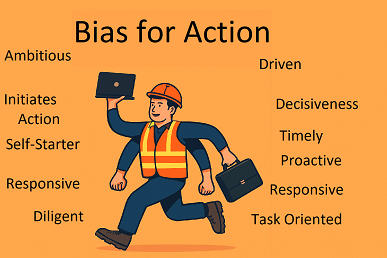
Definition: Bias for Action reflects an ambitious, driven, and proactive attitude, where individuals take the initiative, prioritize tasks, and maintain focus to achieve goals efficiently and effectively. It embodies decisiveness, diligence, and resilience, allowing employees to respond to challenges with confidence, persistence, and adaptability while seeking continual improvement. This quality fosters collaboration, innovation, and leadership, as team members organize efforts, support colleagues, and embrace opportunities to drive progress and exceed expectations.
Accountability
Achievement
Action
Attitude
Bias for Action
Results Oriented
Excellence
Flexibility
Change
Resourcefulness
Analytical
Initiative
Juggling Multiple Responsibilities
Career Development
Training
Commitment
Engagement
Pride/Loyalty
Professionalism
Respect for Others
Self-Management
Teamwork
Ambitious
Ambitious focuses on an individual's proactive desire to take on responsibilities, exceed expectations, and continually push forward toward higher achievements. This dimension highlights enthusiasm, strong internal motivation, assuming accountability, and consistently striving to do more work beyond direct assignments. It prioritizes personal initiative and long-term aspirations, ensuring that individuals and teams are always seeking growth and advancement.
- I sometimes need to put in extra effort when needed.
- My coworkers are people who want to do more work.
- I have a strong internal motivation to achieve goals and make progress.
- The team leader exhibits personal ambition and drive.
- Our team is always looking to do more work.
- Our manager has a bias for getting things done.
- Associates display high energy and enthusiasm on consistent basis.
- My team assumes full accountability for overseeing and executing the essential tasks required to achieve the desired outcomes.
- Employees in my department are very proactive and take on many responsibilities not directly assigned.
Driven
Driven emphasizes taking deliberate and persistent action with urgency to accomplish specific goals and overcome obstacles. This dimension centers on mobilizing others, maintaining a strong work ethic, tackling challenges head-on, and making progress despite difficulties. It prioritizes determined execution and focused energy, ensuring that work gets done efficiently and problems are addressed with urgency.
- My department conveys a sense of urgency about addressing problems and opportunities
- Leaders take purposeful and persistent action to achieve goals.
- The members of my team tackle obstacles head-on and find ways to navigate around them.
- My manager develops a sense of urgency in all tasks.
- The supervisor works quickly when faced with difficult problems.
- My supervisor drives and mobilizes others to progress toward goals.
- The members of my team are driven to get things done.
- Colleagues are engaged in the project and driven to succeed.
- The project manager takes deliberate and effective steps to ensure progress and completion of tasks.
- Senior executives demonstrate a strong work ethic and inspire others to take action.
- Our department is motivated to accomplish goals.
Initiates Action
Initiates Action focuses on taking the first steps toward addressing tasks, challenges, or new projects without waiting for direction. This dimension highlights proactively identifying needs, setting the pace for projects, continuously monitoring progress, and converting strategic plans into concrete actions. It prioritizes self-starting and momentum-building, ensuring that individuals and teams drive initiatives forward without external prompts.
- My supervisor takes initiative and starts working towards solutions immediately.
- I am able to take the lead on new initiatives or projects, setting the direction and pace.
- My manager takes the initiative to identify and address potential problems before they escalate.
- The members of my team take initiative, start tasks, make decisions, and drive progress without waiting for instructions or approvals.
- The project lead initiates the commencement of work on projects.
- Associates take the initiative to get things done.
- Senior executives convert the strategic plan into action
- My team leader initiates the necessary actions and continuously monitors progress, ensuring that deadlines are met, and proactively addresses any obstacles that may arise.
- My division initiates tasks or projects that address identified needs.
- Team members take the initiative and are proactive.
Decisiveness
Decisiveness emphasizes the ability to make firm, timely decisions, even under pressure, to ensure progress and avoid delays. This dimension centers on confidence in judgment, quick decision-making, taking corrective actions when necessary, and ensuring choices are made without hesitation. It prioritizes clarity and efficiency, ensuring that individuals make necessary decisions to prevent stagnation.
- The team leader has the confidence to make decisions independently when necessary, without always seeking approval.
- My manager is not afraid to take corrective action when necessary.
- The members of my team take decisive action when needed to keep the project moving forward.
- My team leader does not wait for approvals unless absolutely necessary.
- My manager makes decisions
- Our manager makes decisions promptly, without getting bogged down by overthinking or unnecessary delays.
- Employees make effective decisions, even when under pressure
- I know how to make decisive actions.
Timely
Timely focuses on making prompt decisions, managing time effectively, and ensuring tasks are completed within set deadlines. This dimension highlights maintaining momentum, avoiding delays, structuring work with milestones, and confidently addressing issues without overanalyzing. It prioritizes efficiency and urgency, ensuring that decisions and actions are executed promptly to keep workflows moving forward.
- The team leader is punctual and consistently meet deadlines.
- Coworkers develop a clear timeline with milestones and deadlines to stay on track.
- Employees in my department make timely decisions to avoid delay and keep the momentum going.
- My division makes timely and confident decisions without overanalyzing.
- Our department makes decisions swiftly and confidently.
- The project manager completes work on time
- My supervisor makes decisions within a specific time limit to avoid overthinking about problems.
- Leaders use time management to focus on the most critical task and allocate time effectively to ensure they are completed.
- Supervisors manage time by addressing small task promptly rather than letting them pile up.
Self-Starter
Self-Starter focuses on taking independent action without external prompts, initiating tasks and responsibilities, and moving beyond theoretical discussions into real execution. This dimension highlights personal responsibility, prioritizing actions, promptly starting tasks, and ensuring timely decision-making without excessive deliberation. It prioritizes initiative and self-motivation, ensuring individuals drive progress rather than waiting for instructions.
- The project lead is willing to take the first step and start task without waiting for external prompts.
- The team leader sets priorities for his/her action and initiates timely action
- Colleagues seize opportunities to engage in action on a project.
- The supervisor prefers taking action and making decisions promptly rather than subjecting questions to prolonged analyses and extensive committee reviews.
- Coworkers in my department develop goals and initiate actions instead of being constrained by the situation.
- Team members move beyond theoretical discussions into tangible, result-driven actions, fostering a culture of proactivity and continuous progress.
- My manager starts tasks immediately and then updates the course of action as needed.
- Our team takes personal responsibility for managing the necessary actions.
Proactive
Proactive emphasizes anticipating potential challenges, addressing problems before they escalate, and implementing preemptive strategies to ensure long-term success. This dimension centers on developing contingency plans, monitoring performance metrics, resolving issues before they become obstacles, and strategically planning for future challenges. It prioritizes preventative action and foresight, ensuring individuals and teams mitigate risks before they disrupt operations.
- My manager develops contingency plans for various scenarios, ensuring the team is prepared for different outcomes.
- My coworkers develop a proactive approach to solving problems and issues on a project.
- Our department is proactive in taking initiative and getting things done.
- Coworkers foresee potential obstacles and act preemptively to address them.
- Supervisors identify key constraints that may impact the achievement of results.
- The supervisor is proactive in solving problems; does not wait to be told to do something.
- Managers address potential problems.
- My supervisor anticipates challenges and addresses them before they become major obstacles.
- The project manager identifies potential hurdles and finds ways to navigate around them, ensuring that progress is not stalled.
- My manager addresses any problems immediately before its too late.
- Supervisors address minor issues early to prevent them from escalating into larger problems.
- Our department monitors progress and performance metrics to detect early signs of issues.
Responsive
Responsive focuses on adjusting quickly to changes, unforeseen challenges, or emerging issues while keeping work moving forward. This dimension highlights adaptability, adjusting plans based on new developments, maintaining open communication about progress updates, and responding swiftly to obstacles or critical issues. It prioritizes flexibility and situational awareness, ensuring individuals react efficiently to evolving circumstances.
- My coworkers adapt quickly and find alternative ways to achieve goals.
- Colleagues adapt to changing circumstances and find new ways to achieve goals.
- I know how to provide regular progress updates and keep everyone informed about any changes or developments.
- My manager responds quickly to tough "people issues" when dealing with internal or external customers.
- The supervisor is flexible and open to change, quickly adjusting project plan as needed to navigate unforeseen challenges.
- The project leader responds to problems and issues.
- Leaders take action immediately when an opportunity or problem arises.
Diligent
Diligent focuses on consistent, dedicated effort toward completing tasks while ensuring thoroughness and quality. This dimension highlights perseverance, attention to detail, systematically transforming concepts into action, risk assessment, and ensuring tasks are fully executed from start to finish. It prioritizes commitment and follow-through, ensuring that individuals remain dedicated to seeing projects through completion.
- Our team works steadily through tasks with consistent effort, ensuring each step is completed thoroughly rather than being rushed.
- Coworkers in my department follow a structured process to move work from start to finish.
- My supervisor highlights the implementation action plan for each idea created.
- Associates persist through obstacles by methodically troubleshooting issues until the task is fully resolved.
- My team leader ensures that every concept is systematically transformed into practical, measurable steps for implementation.
- Our manager reviews work before finalizing it to ensure accuracy, completeness, and alignment with expectations.
- The project lead puts in effort and shows a dedication to seeing projects through to completion.
- My manager gets the team to initially complete small tasks to boost their confidence and motivation to take on bigger challenges.
- Coworkers maintain momentum on long-term task by diligently completing each step in the process.
- Our manager conducts a thorough risk assessment at the start of the project to identify potential issues that could arise.
- I am able to concentrate on task single-mindedly until complete.
Focused
Focused emphasizes maintaining concentration and minimizing distractions to ensure efficient task completion. This dimension centers on limiting interruptions, prioritizing essential tasks, avoiding unnecessary diversions, and keeping attention on achieving tangible results. It prioritizes clarity and task management, ensuring individuals maximize productivity by staying engaged in key objectives.
- The team leader helps the team to stay focused on what tasks need to be completed.
- I am able to maintain concentration and avoiding distractions to ensure consistent progress.
- My coworkers reduce interruptions and stay focused on their objectives.
- My supervisor focuses on what matters most and allocate time and resources effectively.
- Employees at the company limit interruptions and stay focused on the task at hand.
- Our team revisits goals and deadlines to keep attention anchored on high-value outcomes.
- Employees use structured routines (such as checklists or progress trackers) to stay centered on critical deliverables.
- My team maintains momentum by returning quickly to core tasks after unavoidable interruptions.
- My manager focuses on results through actions that are always aimed at achieving tangible results and meeting deadlines.
- The department head focuses efforts on tasks that need to be completed first.
Task Oriented
Task Oriented emphasizes maintaining structured execution, prioritizing tasks effectively, and focusing on completing high-impact work. This dimension centers on breaking large tasks into manageable steps, keeping momentum steady, maintaining enthusiasm, and ensuring that deadlines are met efficiently. It prioritizes organization and execution, ensuring that work progresses in a structured and deliberate manner.
- Managers approach tasks with a practical, problem-solving mindset that remove obstacles and accelerate execution.
- The project leader breaks down complex tasks into more manageable steps.
- Coworkers prioritize task effectively, often choosing tasks that have the highest impact or urgency.
- The supervisor prioritizes tasks to ensure the most essential tasks are completed first.
- My team breaks complex assignments into clear, manageable steps so progress begins immediately and continues without stalling.
- My coworkers maintain steady forward movement by concentrating on one task at a time until it reaches completion.
- My supervisor completes even the smallest of tasks to avoid causing any delay in the project.
- The project manager creates and updates action lists to track deliverables, deadlines, and dependencies.
- Our team approaches tasks with enthusiasm and a problem-solving mindset that inspires colleagues.
- Managers divide large tasks into smaller more manageable steps to maintain momentum.
- The project lead prioritizes tasks based on urgency and impact, ensuring the most critical work is addressed first and completed efficiently.
Continual Improvement
Continual Improvement emphasizes identifying opportunities for progress, refining processes, and incorporating feedback to enhance efficiency over time. This dimension centers on optimizing work methods, supporting skill development, implementing gradual enhancements, and making strategic adjustments to drive long-term success. It prioritizes growth and refinement, ensuring that tasks and systems evolve to become more effective.
- Leaders identify ways to simplify work process and reduce cycle time
- Our department seeks and utilizes opportunities for continuous learning and self-development.
- I am able to keep improving on existing process and procedures.
- My team leader supports others to gain skills
- Our manager is looking for ways to enhance processes and make progress, no matter how small.
- The project manager engages in continuous learning by actively seeking and incorporating feedback to improve processes and performance.
- Employees at the company recognize opportunities for improvement or areas that need attention.
- My supervisor seeks to enhance processes and procedures, even if only a minor change, to make them more efficient.
Persistent
Persistent focuses on maintaining momentum, pushing forward despite setbacks, and ensuring tasks reach full completion through determination. This dimension highlights decisive action, following up on problems, preventing stagnation, overcoming obstacles, and continuing forward until goals are achieved. It prioritizes consistency and relentless progress, ensuring individuals and teams stay committed to moving projects toward completion.
- The project manager will initiate work on projects that have stalled.
- My team leader persists until tasks are 100% completed.
- Managers delegate tasks if needed to keep a project moving forward.
- I know how to take decisive action to address problems, following up with relevant team members and coaching them on how to improve.
- My team overcomes obstacles in pursuit of goals.
- I sometimes need to maintain momentum of project to prevent them from stagnating or stalling.
- I sometimes need to complete even small tasks to keep the momentum moving forward.
- Employees at the company respond to adversity with action.
Resilient
Resilient emphasizes adapting to change, viewing challenges as growth opportunities, and maintaining determination even in difficult circumstances. This dimension centers on fostering adaptability, coaching teams through challenges, turning setbacks into learning experiences, and creatively finding ways to navigate barriers. It prioritizes mental toughness and flexibility, ensuring individuals remain strong and resourceful in the face of adversity.
- My supervisor views obstacles and problems as opportunities to demonstrate skills and resilience.
- The project manager is resourceful in finding solutions to challenges, utilizing available resources effectively.
- Coworkers in my department view obstacles as opportunities for action.
- My manager finds creative and effective ways to utilize available resources to overcome obstacles.
- My manager coaches others to foster an environment which can adapt quickly and willingly to rapid change.
- My manager overcomes obstacles to strengthen resilience and determination, becoming more capable of handling future challenges.
- My manager is determined to keep moving forward, even in the face of setbacks and challenges.
Reliable
Reliable focuses on consistency, dependability, and following through on responsibilities to ensure work progresses smoothly. This dimension highlights taking ownership of assigned tasks, delivering on promises, keeping teams informed about progress, and ensuring that actions align with expectations. It prioritizes trustworthiness and follow-through, ensuring individuals and teams can be counted on to complete their work effectively.
- My team leader delivers on promises.
- Team members maintain predictable work habits and follow-through, giving the team confidence that commitments will be honored.
- Associates can be counted on to complete assigned tasks without needing reminders, oversight, or repeated follow-ups.
- My team is reliable and dependable taking on responsibilities for work in the department.
- The project leader keeps the team regularly updated as to the progress to ensure everyone is aware of what work still needs to be done.
- Coworkers in my department meet deadlines consistently, even when workload increased or unexpected challenges arise.
- The project lead provides timely status updates so colleagues always know where work stands and what remains to be completed.
Commitment
Commitment emphasizes dedication to tasks, taking ownership of responsibilities, and ensuring consistent progress toward goals. This dimension centers on accountability, prioritizing efficiency, maintaining focus on work objectives, and demonstrating loyalty to achieving success. It prioritizes steadfast dedication and responsibility, ensuring individuals remain deeply invested in completing their duties effectively.
- Employees are accountable for the outcomes of decisions, whether they lead to success or require adjustments.
- Coworkers in my department demonstrate a commitment to progress by collaborating with others.
- Managers are concerned about getting things done on time and within budget
- Employees in my department maintain a clear commitment to the task at hand.
- My supervisor takes accountability for progress, demonstrating a strong commitment to action.
- My manager demonstrates a genuine commitment to the job and work in general.
Productive
Productive focuses on maximizing efficiency, leveraging resources effectively, and completing a high volume of work. This dimension highlights creativity in problem-solving, overcoming obstacles, making the best use of available tools, and ensuring a strong output of work. It prioritizes effectiveness and execution, ensuring individuals and teams consistently deliver tangible results.
- The team leader completes a large volume of work.
- Leaders use creativity to solve problems, tackle obstacles and make progress.
- Employees use creativity, problem-solving skills, and available resources to overcome challenge and deliver results.
- Our team makes the most of the available resources, whether it's time, equipment, or people.
- My manager completes a high amount of work.
Confident
- My supervisor projects a "can-do" attitude when interfacing with peers, subordinates and customers(especially during difficult and challenging times).
- The supervisor keeps a positive outlook, even when facing setbacks, to inspire confidence and determination in others.
- My manager remains calm and composed during challenging situations to reassure and motivate the team.
- My team leader projects a can-do attitude that, within the department, is contagious.
Goal Oriented
Goal Oriented emphasizes setting clear objectives, aligning team efforts toward shared goals, and maintaining focus on achieving specific results. This dimension centers on strategic planning, setting expectations, establishing priorities, and fostering collaboration to ensure success. It prioritizes direction and alignment, ensuring that actions contribute meaningfully toward larger objectives.
- My supervisor communicates clear goals, priorities, and deadlines to the team to ensure progress is maintained.
- Employees in my department work well with others to achieve common goals and leveraging diverse skills and perspectives.
- My manager communicates clear goals, expectations, and timelines to ensure everyone is aligned and working towards the same objectives.
- My coworkers work to achieve department goals.
- My team leader establishes clear and actionable goals to guide the team's efforts and ensure progress.
- The team leader works to complete department and team goals.
- My manager sets high expectations on results for themselves and their teams, constantly pushing for excellence.
Organized
- My department creates and maintains action lists.
- Our manager identifies critical project components, such as product design, marketing materials, and coordinating with suppliers.
- The supervisor compiles lists of all steps that need to be completed for a project.
- My manager sets deadlines and sub-deadlines on projects to ensure a sense of urgency and adherence to a schedule.
- The project lead creates and maintains to-do lists.
- Leaders establish clear procedures and best practice to minimize the likelihood of problems occurring.
Leads Others
- The project lead delegates tasks and duties that need to be performed for completion of a project.
- My manager sets a work standard for others to emulate.
- Team members foster a culture of action orientation.
- My manager motivates others to achieve or exceed goals
- Supervisors assign responsibility for each step in a project.
- Our manager sets an exemplary standard of performance for others to follow.
- The department head fosters an action-oriented culture within the department.
- My supervisor motivates others to achieve or exceed goals
- The project manager motivates and supports others to gain skills
Collaboration
- Supervisors offer assistance and create a culture where team members feel supported and are more likely to help each other.
- The project lead encourages and supports team members to take initiative and overcome challenges.
- Associates are willing to help colleagues with their tasks and challenges.
- Coworkers in my department work across organizational lines and boundaries to attain goals.
- Our manager assists others to ensure that everyone is on track to help the team reach its goals faster.
- The supervisor helps others to contribute to the team's overall efficiency and effectiveness.
Innovative
- Managers encourage risk taking and experimentation to improve performance
- I sometimes need to take calculated risks.
- I am able to think outside the box to find innovative solutions to problems.